Greenhouse Effect Explained: Causes, Greenhouse Gases, Impacts, and Solutions
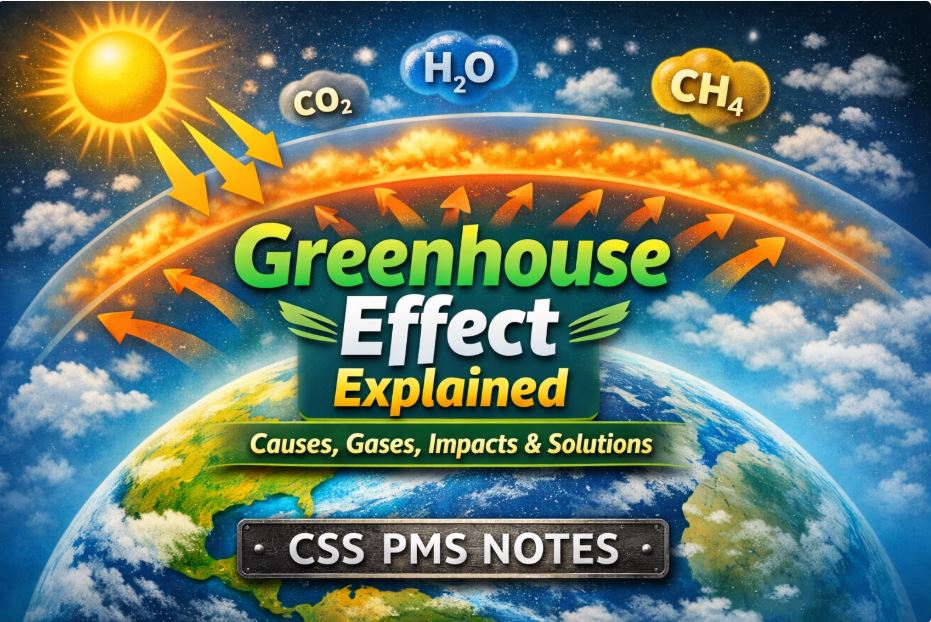
Why the Greenhouse Effect Matters
Have you ever wondered why Earth is warm enough for life?
Or why Earth is getting hotter now than ever before?
The answer lies in a natural process called the Greenhouse Effect — a process that keeps our planet warm, but when intensified, it leads to dangerous climate changes.
Without the greenhouse effect, Earth would be too cold to support life. Scientists say that the average temperature would be about 18 °C cooler than today if this process did not exist. (NASA Science)
What Is the Greenhouse Effect?
The Greenhouse Effect is the process by which certain gases in Earth’s atmosphere trap heat from the sun and keep the planet warm. (Encyclopedia Britannica)In simple words:
- Sunlight reaches Earth.
- Earth absorbs the light and gets warm.
- Earth sends heat back into the air.
- Some heat escapes into space.
- Some heat is trapped by gases in the air.
- This trapped heat keeps Earth warm enough to live on.
This is similar to how a greenhouse works for plants — sunlight enters, heat gets trapped, and the inside stays warm. (NASA Science)
Simple Example to Understand It
Imagine a car parked in the sun on a hot day:
- Sunlight enters through the windows.
- The car’s interior absorbs the light and gets warm.
- Because the heat cannot easily escape, the inside becomes much hotter than outside.
This is a small example of the greenhouse effect in action. (Dunya)
Table: Natural vs Enhanced Greenhouse Effect
| Aspect | Natural Greenhouse Effect | Enhanced Greenhouse Effect |
|---|---|---|
| What it is | Normal warming process needed for life | Extra warming due to humans |
| Why it happens | Natural gases trap heat | More greenhouse gases from human activities |
| Example | Water vapor and CO₂ keep Earth warm | Burning fuels increases CO₂ and heats Earth more |
| Effect on life | Good | Harmful when too strong |
Why the Greenhouse Effect Happens — Causes
There are natural causes and human causes.
1. Natural Causes
These are processes that occur without human involvement:
- Water vapour in the air absorbs heat. (British Geological Survey)
- Volcanoes release gases and dust, which can change heat levels. (vedantu.com)
- Natural changes in Earth’s surface and oceans affect heat balance.
These natural causes have been happening for millions of years.
2. Human Causes (Main Drivers)
Human activities have increased the greenhouse effect sharply:✔ Burning fossil fuels (coal, oil, gas) releases CO₂. (Number Analytics)
✔ Deforestation reduces trees that absorb CO₂. (the intact one)
✔ Industrial pollution releases gases like nitrous oxide and CFCs. (Dialogue Earth)
✔ Agriculture releases methane from livestock and rice paddies. (vedantu.com)
✔ Waste and landfills produce methane as garbage breaks down. (the intact one)
Major Greenhouse Gases
| Gas | Symbol | Source | Role |
|---|---|---|---|
| Water vapour | H₂O | Oceans, evaporation | Most abundant; increases with heat (British Geological Survey) |
| Carbon dioxide | CO₂ | Fossil fuels, deforestation | Main human-caused gas (NASA Science) |
| Methane | CH₄ | Livestock, landfills | Much stronger at trapping heat (StudySmarter UK) |
| Nitrous oxide | N₂O | Fertilizers, industry | Potent gas from agriculture (StudySmarter UK) |
| Ozone | O₃ | Pollution and natural | Warming in lower atmosphere (StudySmarter UK) |
How the Greenhouse Effect Affects Earth — Impacts
The greenhouse effect has many major impacts, especially when intensified by humans:
1. Global Warming
Earth’s average temperature is rising faster than before.
- Ice at the poles is melting.
- Sea levels are rising.
- Many places are hotter than in the past.
This long-term increase in temperature is called global warming.
2. Extreme Weather
More heat means:
- Stronger storms
- Severe droughts
- Heavy rainfall and floods
Climate patterns are changing. (the intact one)
3. Ocean Changes
The ocean absorbs heat and CO₂.
- Sea level rise
- Ocean acidification
- Harm to coral reefs and marine life
4. Agriculture and Food Security
Heat and changing rain patterns affect crop growth. Some regions become too dry, others too wet.
Simple Point-wise Summary of Effects
- Higher temperatures
- Changing weather patterns
- Melting ice and rising seas
- Damage to crops and water shortages
- Stress on animals and natural habitats
Solutions — How to Slow Down the Enhanced Greenhouse Effect
The good news: we can reduce the enhanced greenhouse effect.
✔ Reduce Fossil Fuel Use
- Use solar power
- Use wind energy
- Use electric vehicles
✔ Plant More Trees
Trees absorb CO₂ from the air.
✔ Improve Farming Practices
Reduce methane from animals and rice fields.
✔ Better Waste Management
Recycle and reduce landfill waste to cut methane.
✔ Energy Efficiency
Homes and factories use less energy.
Simple Table: Prevention Actions
| Action | Benefit |
|---|---|
| Renewable energy | Cuts CO₂ emissions |
| Tree planting | Absorbs CO₂ |
| Clean transport | Less fossil fuel use |
| Recycling | Reduces methane from waste |
| Energy saving | Lower greenhouse gas release |
Conclusion
The Greenhouse Effect is a natural and essential process that keeps Earth warm. But when human activities release too many greenhouse gases, this process becomes stronger and leads to global warming and climate change.
Understanding it helps us make better choices for a stable and healthy planet. Sustainable living, clean energy, and better policies can guide us toward a safer future.
10 Short FAQs
Q1: What is the greenhouse effect?
A: It is the process of heat being trapped by gases in Earth’s atmosphere. (NASA Science)
Q2: Why is it called a “greenhouse” effect?
A: Because it works like a greenhouse for plants, trapping heat. (NASA Science)
Q3: Which gas is the most important greenhouse gas?
A: Water vapour is most abundant, but CO₂ is most controlled by humans. (British Geological Survey)
Q4: Is the greenhouse effect natural?
A: Yes, but humans have enhanced it. (Encyclopedia Britannica)
Q5: What activities increase greenhouse gases?
A: Burning fossil fuels, deforestation, farming, waste. (the intact one)
Q6: How does the greenhouse effect affect weather?
A: It causes hotter temperatures and more extreme weather. (the intact one)
Q7: Does the greenhouse effect cause global warming?
A: Yes — especially the enhanced greenhouse effect. (Number Analytics)
Q8: Can we reduce it?
A: Yes — by cutting emissions and planting trees.
Q9: What is the biggest source of CO₂?
A: Fossil fuel burning for energy. (Number Analytics)
Q10: Why should students know this?
A: It explains climate change — a key issue in exams and real life.