Carbon Credits Explained: Meaning, Benefits & How They Work
What Are Carbon Credits?
Carbon credits are permits that allow a person, company, or organization to emit a certain amount of carbon dioxide (CO₂) into the atmosphere.
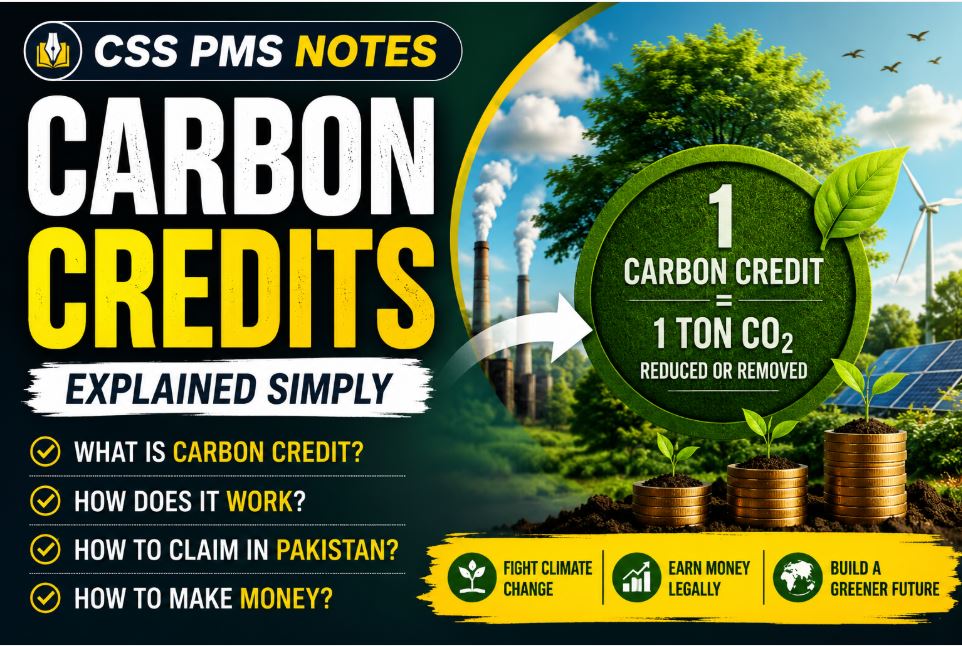
One carbon credit equals one metric ton of carbon dioxide (CO₂) or its equivalent greenhouse gases removed or prevented from entering the atmosphere. Carbon credits help reduce climate change by encouraging companies to lower their carbon emissions.
What Is 1 Carbon Credit Equal To?
One carbon credit is equal to:
- 1 metric ton (1,000 kg) of carbon dioxide (CO₂)
- Or an equivalent amount of another greenhouse gas
For example, if a project removes one ton of CO₂ from the atmosphere, it can generate one carbon credit.
How Do Carbon Credits Work?
Carbon credits work through a simple process:
- A project reduces or removes carbon emissions.
- The project is verified by an approved organization.
- Carbon credits are issued based on the amount of carbon reduced.
- Companies buy these credits to offset their emissions.
For example, a company that produces high carbon emissions can buy carbon credits from a forest conservation project to balance its environmental impact.
Why Are Carbon Credits Important?
Carbon credits play an important role in fighting climate change.
Benefits of Carbon Credits
- Reduce greenhouse gas emissions
- Encourage clean energy projects
- Protect forests and ecosystems
- Support sustainable development
- Create new income opportunities
- Help countries meet climate goals
How to Make Money with Carbon Credits?
Many individuals, farmers, and businesses can earn money through carbon credit projects.
Common Ways to Earn Carbon Credits
1. Tree Plantation Projects
Planting and protecting forests absorbs carbon dioxide from the atmosphere.
2. Renewable Energy Projects
Solar, wind, and hydropower projects reduce dependence on fossil fuels.
3. Sustainable Agriculture
Climate-smart farming practices can reduce emissions and generate credits.
4. Waste Management Projects
Capturing methane from landfills can create carbon credits. Once verified, these credits can be sold in carbon markets to companies looking to offset emissions.
How to Claim Carbon Credits in Pakistan?
Pakistan has significant potential for carbon credit projects due to its forests, renewable energy resources, and agricultural sector.
To claim carbon credits in Pakistan:
Step 1: Start an Eligible Project
Examples include:
- Afforestation projects
- Reforestation projects
- Solar energy installations
- Biogas projects
- Sustainable agriculture initiatives
Step 2: Measure Carbon Reduction
The project must show how much carbon it removes or prevents.
Step 3: Verification
An accredited carbon standard organization verifies the project.
Step 4: Registration
The project is registered under an approved carbon credit program.
Step 5: Receive and Sell Credits
After approval, carbon credits are issued and can be sold in international carbon markets.
Carbon Credits and Pakistan
Pakistan faces serious climate challenges, including floods, droughts, and rising temperatures. Carbon credit programs can help:
- Increase forest cover
- Promote renewable energy
- Attract foreign investment
- Create green jobs
- Support climate action
Programs such as the Billion Tree initiatives have shown how forest restoration can contribute to carbon sequestration and environmental protection.
Challenges of Carbon Credits
Despite their benefits, carbon credits face some challenges:
- Complex verification processes
- High registration costs
- Limited awareness
- Market price fluctuations
- Risk of greenwashing by some companies
Proper monitoring and transparency are essential for success.
Conclusion
Carbon credits are an important tool for reducing greenhouse gas emissions and fighting climate change. One carbon credit equals one metric ton of carbon dioxide reduced or removed from the atmosphere. They support renewable energy, forest conservation, and sustainable development while creating economic opportunities.
For countries like Pakistan, carbon credits can play a major role in environmental protection and green economic growth.
Frequently Asked Questions (FAQs)
What is carbon credit and how does it work?
A carbon credit is a certificate representing one metric ton of carbon dioxide reduced or removed from the atmosphere. Companies buy credits to offset their emissions.
What is 1 carbon credit equal to?
One carbon credit equals one metric ton (1,000 kilograms) of carbon dioxide (CO₂) or its equivalent greenhouse gases.
How to claim carbon credits in Pakistan?
You must develop an eligible carbon-reduction project, get it verified, register it under an approved carbon program, and then receive carbon credits.
How to make money with carbon credits?
You can earn money by developing projects such as tree plantations, renewable energy systems, sustainable farming, or waste management projects and then selling the carbon credits generated.